Home Chinese Drywall
Chinese drywall remediation.
If your Florida home was built or remodeled between about 2001 and 2009, defective imported drywall is worth ruling out. We remediate it properly — and we'll tell you straight if we don't think you have it.
The problem
Drywall that quietly corrodes the house around it.
During the building boom of the mid-2000s — and again in the rebuilding after the 2004 and 2005 hurricane seasons — a large volume of imported wallboard came into Florida. Some of it emits sulfur compounds.
Those emissions attack copper and silver. Homeowners typically notice the air-conditioning failing again and again, a smell that never quite goes, and metal turning black: coils, wiring, door hardware, mirrors, jewelry.
Florida was one of the worst-affected states in the country, and Manatee and Sarasota counties are both on that list. Plenty of affected homes have since changed hands more than once, so a 2004-built house you bought in 2019 is not automatically clear.
Warning signs
Six things that should make you look closer.
No single one of these proves anything. Two or three together are worth a phone call.
A sulfur smell
A rotten-egg or "struck match" odor that's strongest in closed rooms, and worse when the house has been shut up in the heat.
Blackened copper
Copper wiring, pipework or AC coils turning dark gray or black with a powdery surface, rather than the usual dull brown.
Repeated AC failures
Evaporator coils failing every couple of years, when they should comfortably last a decade or more.
Tarnished metal
Silverware, jewelry, mirror backing and chrome fittings tarnishing unusually quickly throughout the house.
The build date
Constructed, extended or remodeled between roughly 2001 and 2009 — particularly 2005 to 2008.
Symptoms that follow you home
Occupants reporting irritated eyes, throat or sinuses that ease when they're away from the house. Speak to a doctor about health effects — we're builders, not physicians.
Our process
How remediation actually works.
There's no shortcut. Sealing, painting, ozone and air scrubbing don't fix the source — the board has to come out.
Assess
We inspect the house, look behind outlets and at the air handler, check markings on the board where we can reach it, and tell you whether it warrants formal testing.
Scope & price
A written scope covering exactly what comes out, what gets replaced, what it costs and how long you'll be out of the house.
Strip out
Affected drywall removed under containment. Corroded wiring, outlets, breakers, fixtures, affected HVAC components, gas piping and alarms replaced — not cleaned.
Rebuild
The house is aired, cleaned and rebuilt with new board, insulation, trim, paint and finishes, inspected and handed back to you.
We follow the removal-and-replacement approach set out in federal remediation guidance for problem drywall. We're a building contractor, not a testing laboratory or a law firm — where independent testing or a legal opinion is needed, we'll say so and point you to someone who does that work.
Why us
It's a renovation with a hazard attached.
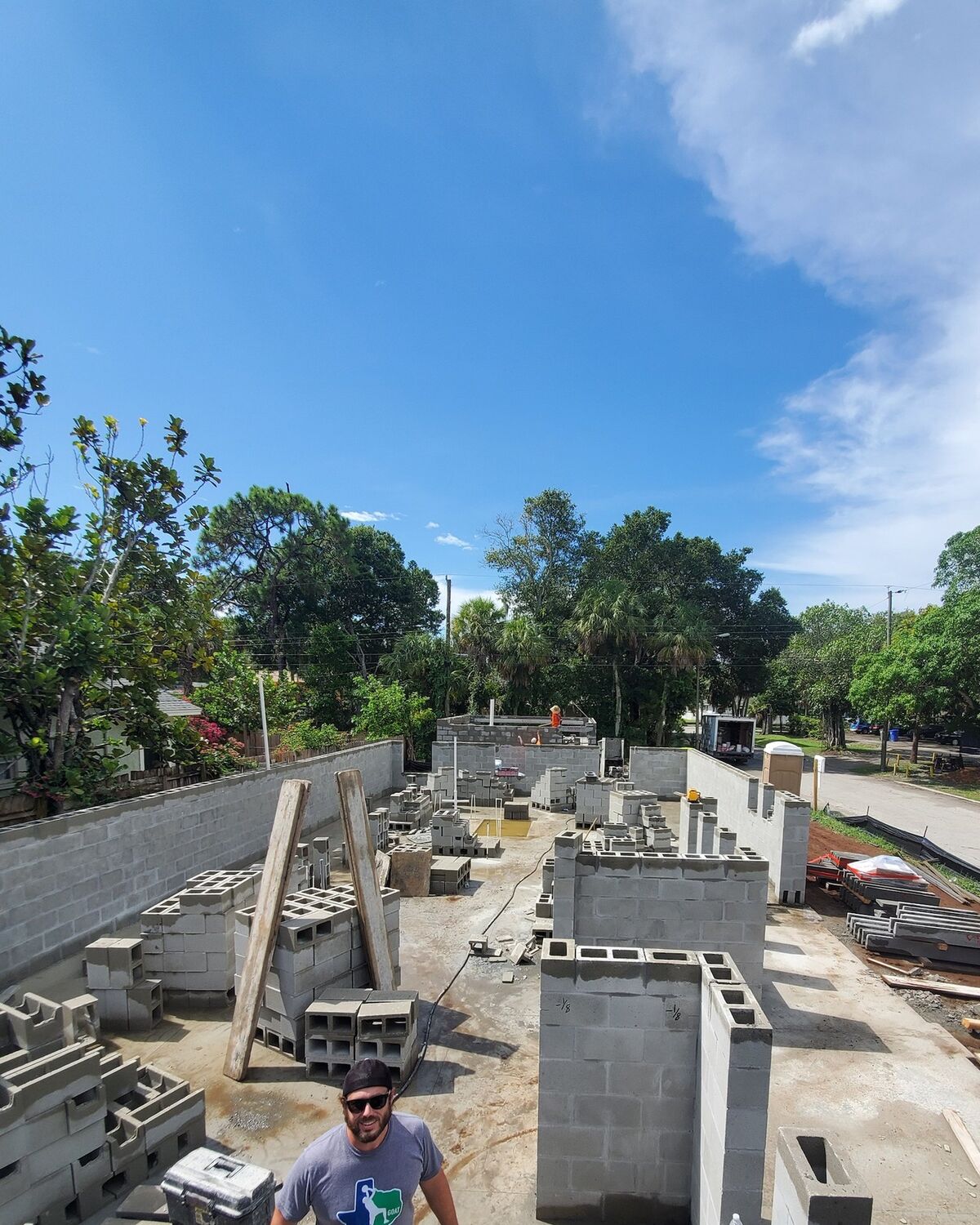
Most of the work is ordinary construction done to an unusually careful standard: containment, disposal, electrical rework, HVAC replacement, then a full rebuild of every surface the board touched.
Because we're a general contractor rather than a specialist tear-out crew, the same team that takes the house apart puts it back together. You aren't left standing in a shell trying to hire a second builder to finish the job.
- One contract covering removal and rebuild
- Electrical and HVAC replacement included
- Documented scope for insurers and buyers
- Finished to the standard of a new build
Questions
Chinese drywall, answered plainly.
Look for the combination: a sulfur smell, blackened copper, repeated air-conditioner coil failures, tarnishing metal, and a build or remodel date between roughly 2001 and 2009. Any one of those alone can have another explanation. Together, they justify an inspection.
No. Sealants, encapsulation, ozone generators and air scrubbers don't stop emissions at the source. Federal guidance has consistently called for the affected board to be removed, along with corroded electrical components and affected HVAC equipment. Anyone offering to spray your problem away is selling you something that won't hold.
Not always — it depends on how the house was built and whether the defective board was used throughout or only in part of it. Some homes were finished with a mix of domestic and imported board. The scope we write will tell you exactly which areas are coming out and why.
A partial remediation of one or two rooms can be measured in weeks. A whole-home tear-out and rebuild runs into months. The house is generally not habitable while the removal is happening, and we'll be upfront about that timeline before you commit to anything.
That depends entirely on your policy and your circumstances, and we can't advise you on it — we're not insurers or attorneys. What we can do is provide a properly documented scope, itemized costs and photographic records, which is what any insurer or attorney will ask you for first.
Sarasota and Manatee counties — Bradenton, Sarasota, Venice, Nokomis, Lakewood Ranch, Palmetto, Parrish, Ellenton, North Port, Myakka City, Panther Ridge, Osprey, Siesta Key, Longboat Key and Anna Maria Island. We don't work outside those two counties.
Next step
Suspect you've got it? Let's find out for certain.
A free, no-obligation assessment. If your house is fine, we'll tell you that and you'll owe us nothing.